This is a write-up of what happened when I tried to do two things at once: clarify my positioning as a fractional CMO for startups, and set up an AI agent to automate parts of the work. They turned out to be the same problem.
The positioning wall
I started the day trying to write a page for my website. The brief I gave myself was simple: explain what I do for early-stage founders. The first draft opened with “Fractional CMO | Tech Startups” and included lines about “positioning and messaging” and “unconventional distribution” and “brand that doesn’t feel like marketing.” It sounded fine. It also sounded like every other marketing freelancer’s website.
The problem crystallised when I read Paul Graham’s essay on startups through the lens of my own copy. His argument is blunt: at the earliest stage, founders have to do sales themselves. The outreach, the conversations, the learning, you can’t outsource that. It’s the whole point. This, of course, raised an uncomfortable question. If the founder should be doing the outreach, what exactly am I selling?
I sat with that for a while. The answer that came back was more specific and more honest than what I’d started with. I’m not the person who gets a founder their first 50 customers. The founder does that. I’m the person who makes the founder significantly more effective while they do it. That means: cold emails that actually get replies, a landing page that holds up when someone Googles them after receiving an outreach, and helping them see the patterns in what the replies are telling them.
A founder doing 30 conversations a week is drowning in signal. The objection that keeps coming up, the job title that always converts, the language that lands. That becomes their positioning. They can’t get there any other way, and they often can’t see it without someone sitting across the data with them. That’s a real and sellable thing. It’s selling the supporting role.
Finding the niche
The next shift came from watching a video by an AI agency founder who’d claimed he’d done $25M in revenue. His core argument: don’t sell automations, sell systems. Partial solutions fail even when they technically work. A chatbot is useless if nobody’s calling. An email sequence is useless if the targeting is wrong. You need the whole pipeline.
That clicked with something I’d already written in my notes. My “first 50 customers” offering isn’t one deliverable: it’s four connected things: outreach quality, presence, signal synthesis, infrastructure. They only work together. The email sequence is pointless without the landing page that backs it up. The landing page is pointless without the messaging insights that come from the conversations.
But the bigger insight was about niche. I’d been calling myself a “marketing generalist for startups,” which is both too broad and not quite right. After working through my ICP document properly, grounding it in research rather than assumptions, the niche got much clearer. It’s not an industry. It’s a problem type.
My niche is technically complex B2B products whose founders can’t get their value proposition to land with buyers. The founder built something real and genuinely sophisticated. They can explain it to another engineer. But when they try to sell it—cold email, landing page, investor pitch—the message doesn’t translate.
That’s the problem I’ve spent ten years solving, just in different contexts. Blockchain education for the United Nations. Quantum computing for non-technical audiences. ZKP privacy for institutional finance. The subject matter changes. The job —making hard things legible to the people who need to understand them—doesn’t.
Web3 is my entry point. Every case study I build there is actually a case study in “made a complex technical product legible to buyers.” That transfers directly to fintech, dev tools, AI infrastructure, anything where the product is genuinely hard to explain.
The deliverables question
With the positioning clearer, I broke the two services into concrete deliverables. About 15 discrete things across the “first 50 customers” and “fractional generalist” offerings. Then I mapped out which of those an AI agent could handle and which actually need me. The answer split cleanly into two categories.
Automatable (the first 70%): Building prospect lists. Enriching contacts with data. Writing first drafts of cold emails. Setting up CRM pipelines. Structuring follow-up sequences. Researching a prospect’s company before outreach.
Not automatable (the 30% that matters): The positioning brief itself—who you’re for, what the pain is, what makes you different. Reading what a reply actually reveals about your market. Deciding which of three outreach angles is strategically right. Writing copy that’s sharp rather than just competent. The founder conversation—understanding what they’re really selling, what they’re afraid to say, why their current message isn’t landing.
The most automatable parts of the service are also the least differentiated. “I’ll build your Clay list” is a commodity play already. The judgment layer—the brief, the signal synthesis, the positioning work—is where the human value lives.
That’s not a threat to the business model. It is the business model. Agents produce the first 70% of every deliverable so I can spend my time on the 30% that actually requires me.
Setting up Hermes
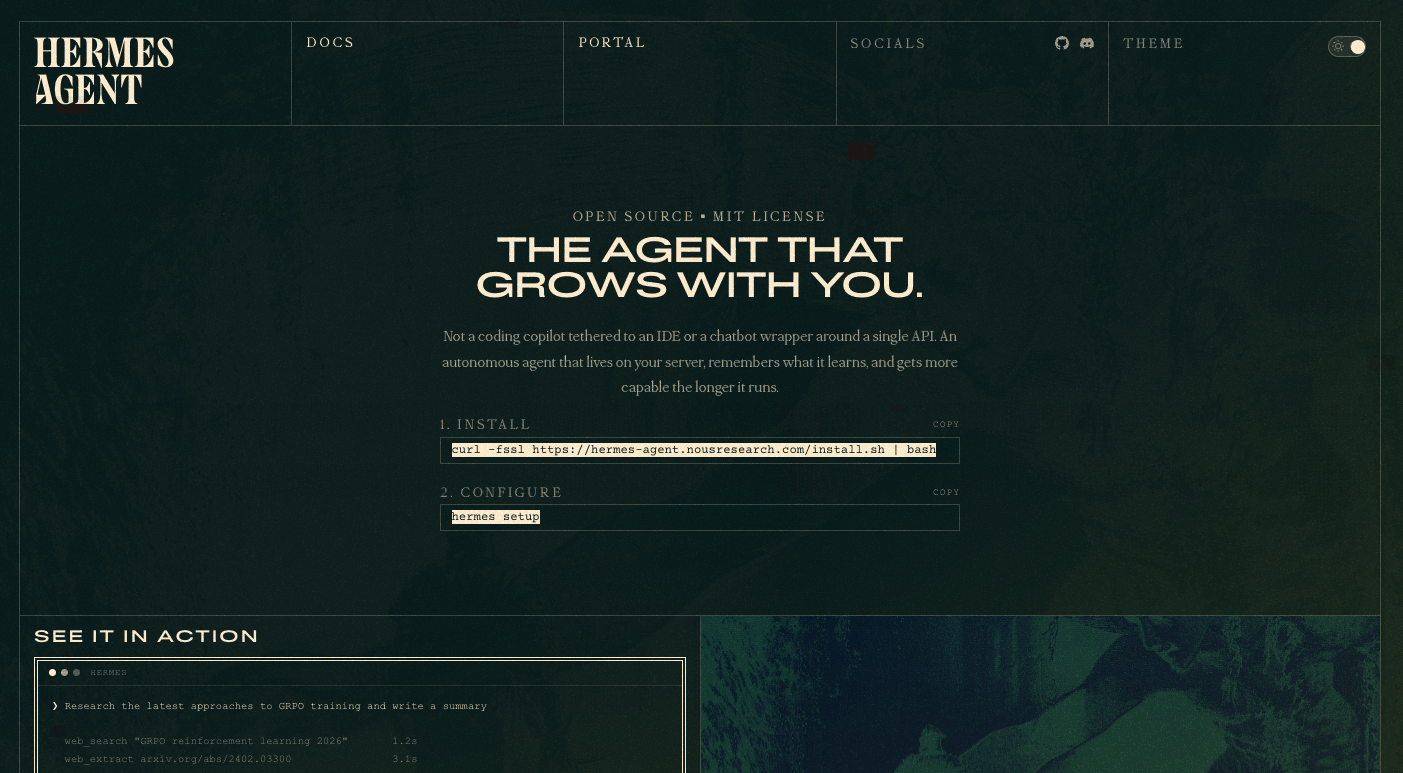
With that clarity, I decided to actually build the thing rather than theorise about it. I’d been comparing Make, n8n, and Hermes CLI—and they turned out to be different layers, not competitors. Make and n8n are workflow plumbing: trigger, action, output. Hermes is something else. It’s a persistent agent that runs on your machine, remembers things across sessions, builds skills over time, and can run scheduled autonomous tasks. The memory system is the differentiator; it builds a deepening model of your work, not just a sequence of steps.
The setup was a learning curve. I’m not a developer. Hermes runs in the terminal, needs Python, needs an API key. The recommended settings got me to a working prompt, but I hit a few walls along the way. The first false start was asking Hermes to draft cold emails. Which is pointless, Claude already does that. I was testing the wrong thing. The second false start was feeding it my ICP document to “remember”, which is a known capability, not something that needs proving. The right test turned out to be: can it find prospects matching my ICP autonomously, without me doing the manual work?
Building the prospecting workflow
This is where it got interesting and messy. The obvious channels didn’t work. LinkedIn and X both blocked the agent immediately—bot detection. Browser-based scraping hit CAPTCHA walls. Web search produced hallucinated results: posts and users that didn’t exist, because the search was too broad and the agent was filling in gaps with plausible fiction.
I eventually found a method that worked reliably for Reddit—no authentication required, no bot detection, real results. It took a few hours of trial and error to get there. I built a prospect-finder skill: a persistent instruction file that tells Hermes how to search for early-stage Web3 founders matching my ICP, filter by recency, and qualify against my criteria.
First run: 4 subreddits, 101 posts collected, 22 qualified ICP matches returned. All real posts from the last month. Real people with real projects. I also built a voice document: a persistent file that tells Hermes how I write. British English, no em dashes, factually accurate background references, always includes my website URL. So every draft DM sounds like me, not like a generic AI output.
The full workflow: Hermes searches, qualifies against ICP, writes draft DMs, saves everything to a CSV. I review and mark which ones to approve. Hermes sends only approved ones. Memory prevents duplicate outreach across runs. Total API cost for the entire session: $4.50.
What didn’t work
I also tried X/Twitter prospecting. Browser got blocked by bot detection. The xurl tool requires paid API access. Parked it.
And I explored alternative data sources beyond the obvious platforms. Telegram groups I’m already part of, Luma for event attendees, Meetup.com for communities like Indie Hackers. These aren’t scrapeable in the traditional sense, but that’s actually the point.
The broader insight: warm-ish access beats cold scraping. The channels where I already have standing, where I’m a member, not a bot, are actually better targeting. The agent becomes a reading and pattern recognition tool applied to communities I’m already in, rather than a scraper trying to break into places that don’t want it.
What I actually learned
Five things, in order of importance.
One: The positioning work and the agent work aren’t separate problems. Figuring out what you’re selling is what makes the agent useful. If the ICP document is wrong, the automation produces wrong things at scale. Garbage brief in, garbage automation out.
Two: The most automatable parts of a marketing service are also the least differentiated. The value isn’t in building the list, it’s in knowing what list to build and what to say to the people on it.
Three: Hermes’s real differentiator isn’t speed. It’s persistent memory and compounding knowledge across sessions. It builds a model of my work that gets more useful over time. That’s genuinely different from running a Make workflow.
Four: Every channel that’s easy to scrape is also easy for everyone else to scrape, which means it’s noisy. The channels that require actual membership—Telegram groups, event attendee lists, community forums—are harder to automate but produce better prospects.
Five: I started the day not knowing what I was selling. I ended it with a clear niche, two defined services, 15 concrete deliverables, an AI agent that found 22 real prospects on its first run, and a pipeline I can run every few days for about a dollar.
The positioning came first. Everything else followed from it.